


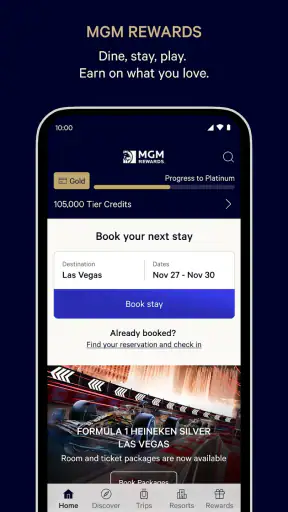
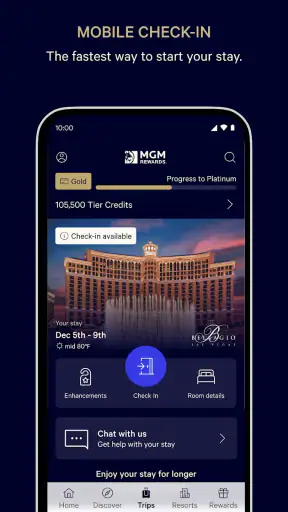
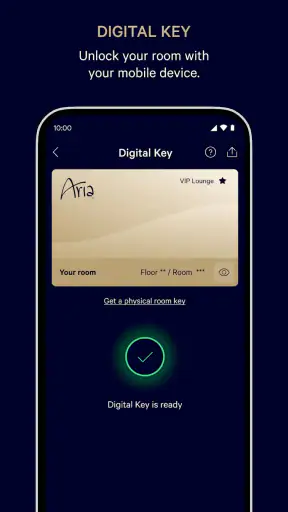
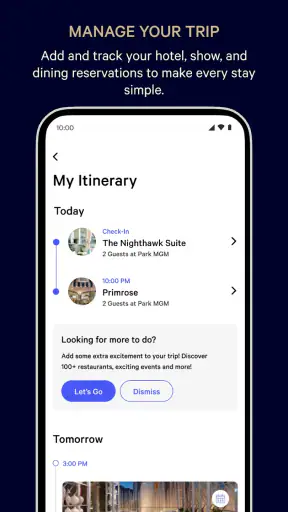



I found MGM Rewards most useful when I treated it as a practical companion for an MGM Resorts visit rather than as a general travel planner. It brings the resort relationship, stay details, play-related rewards, and member activity into one place, which can make a casino trip easier to organize. My overall view is positive, but with an important qualification: its value depends heavily on whether you actually use MGM Resorts properties. If you do, the app can reduce small bits of friction. If you do not, there is little reason to keep it installed.
Developed by MGM Resorts International, this free Travel & Local app is available to everyone and has grown into a widely used mobile service, with more than a million installs and an average rating of 4.1 from roughly thirty-one thousand ratings. It first appeared on October 29, 2015, and the current release is version 26.16.0 for devices running operating system version 10 or later. Those details matter because this is not a brand-new experiment; it is a mature resort-focused app that has had time to become part of the MGM guest experience.
What MGM Rewards is really good at
The strongest part of MGM Rewards is its ability to put loyalty activity beside the practical details of a resort visit. Instead of switching between a booking confirmation, a rewards page, and separate resort information, I can use the app as a central starting point. That does not make every travel task disappear, but it gives the trip a clearer digital home.
The “stay, play, earn” idea is more useful when understood as a workflow than as a slogan. Before a visit, I would use the app to check the reservation-related information available to me and review the rewards side of the trip. During the stay, I would return to it when I wanted a quick reminder of my member activity or needed to orient myself around the MGM experience. Afterward, it becomes a convenient place to see whether the visit has changed my rewards position.
That sequence is one of the app’s less obvious strengths. Many loyalty apps are only opened when a user wants to display a membership card or inspect a balance. MGM Rewards has more value when opened at three separate moments: while planning, while on property, and after leaving. Using it this way helps prevent the common mistake of remembering the rewards program only after the trip is over.
I also like the fact that the app is free. There is no separate purchase decision standing between a guest and the digital membership experience. Of course, free does not mean cost-free in the broader sense: the app is connected to resort spending and gaming activity, so users should not confuse tracking rewards with receiving automatic savings. The sensible approach is to regard rewards as a benefit attached to spending you already intended to make, not as a reason to spend more.
A useful planning tool for resort visits
For a weekend visit, the app can help me keep the trip mentally organized. I might check the stay information before leaving home, review what is available through my rewards account, and then use the same app as a reference while moving through the resort experience. This is especially helpful when a trip includes several reservations or a packed schedule and I do not want to search through old messages every time I need a reminder.
My practical tip is to open the app before traveling, not for the first time at the front desk. Sign in, make sure the account is the one connected to the intended stay, and look through the relevant screens while I still have time to correct a mistake. That preparation is more valuable than trying to learn the interface in a busy lobby or while waiting to check in.
Another useful habit is to take a moment after any meaningful resort interaction to confirm that the account activity looks as expected. I would not assume that every reward-related update appears instantly or that every transaction is categorized exactly as I imagine. A quick review can make it easier to notice an account mismatch or an unclear entry while the details are still fresh.
Where it compares well with ordinary alternatives
The usual alternative is a mixture of a mobile browser, email confirmations, a wallet card, and perhaps a separate notes app. That approach can work, but it scatters the trip across several places. MGM Rewards has a clear advantage when the visit is centered on MGM Resorts because it is designed around that particular relationship rather than around travel in general.
A broad travel app is better for comparing airlines, building a multi-brand itinerary, or managing hotels from different companies. A generic loyalty wallet may also be better for someone who wants one simple place for many unrelated memberships. MGM Rewards is narrower, but that narrowness is also its point: it can be more direct when the user is dealing specifically with MGM Resorts.
I would not replace a full travel organizer with it. It is not the right tool for coordinating every flight, restaurant outside the resort, rental car, or independent hotel on a complicated trip. I see it as the MGM layer of a larger travel setup. Keeping that boundary in mind prevents disappointment and makes the app easier to appreciate.
Where the experience becomes less comfortable
The main weakness is the same thing that gives the app its focus: it is tied closely to MGM Resorts. A person who visits only occasionally may open it once, look at the account, and then forget about it until the next trip. That makes the app feel less useful between visits than an everyday travel tool or a universal loyalty wallet.
The rewards side can also require patience. Loyalty programs are rarely as simple as “spend money and receive an immediate, obvious discount.” Different types of activity can have different relevance to the account, and the app should be treated as a record and access point rather than a promise that every purchase produces the same result. I would read the displayed information carefully and avoid making a booking or spending decision based on an assumption about how an activity will be rewarded.
There is also a psychological limitation worth taking seriously. Putting rewards and resort activity in one convenient place can make spending feel more like progress in a game. For me, the healthiest use is to decide the trip budget first and then use the app to organize the visit within that limit. The app is helpful when it records a planned trip; it is less helpful if it encourages a user to chase a higher status or balance without a clear reason.
Another point of friction is that the experience depends on account access and accurate matching between the user, the reservation, and the rewards profile. If a traveler uses multiple email addresses, creates more than one account, or books through different channels, it is worth checking the login details early. The app cannot make a fragmented account history feel simple if the underlying information is split.
What I would check before relying on it
Before a trip, I would confirm four things in a calm moment:
- Account identity: make sure the signed-in profile is the one connected with the intended MGM Rewards membership.
- Stay details: review the reservation information shown in the app rather than assuming an old confirmation message is still the most useful reference.
- Reward expectations: treat displayed balances and activity as information to review, not as an excuse to increase spending.
- Device readiness: update the app and sign in before arriving, especially if the phone may have weak reception or the visit will be busy.
These steps are not glamorous, but they address the situations most likely to create frustration. In my experience, a loyalty app feels unreliable when I first encounter it during a time-sensitive moment. It feels much better when I have already checked the account and know what I am looking at.
A realistic everyday scenario
Imagine I am taking a short MGM Resorts trip with a room reservation and a limited schedule. On the morning of departure, I open MGM Rewards to review the stay information and confirm that I am using the correct account. At the resort, I use it as a quick reference instead of searching through a crowded inbox. Later, I check the rewards activity so I have a clearer record of the visit.
That scenario shows the app at its best. It does not plan my entire holiday, make a budget for me, or replace every confirmation I may need. It simply keeps the MGM-specific part of the trip together. For a returning guest, that small reduction in searching can be worthwhile, particularly when the visit involves more than one day or several resort-related decisions.
Now imagine a different traveler: someone visiting a city for the first time, staying at an independent hotel, and comparing attractions from many companies. MGM Rewards would add little to that itinerary. A standard travel planner, map app, or general hotel service would be a better first installation. This is a focused tool, not a universal travel assistant.
Who should use it, and who should skip it
I would recommend MGM Rewards to regular MGM Resorts guests, people who want a mobile way to follow their membership activity, and travelers who prefer to keep resort information separate from their general travel planning. It is also a sensible choice for someone who dislikes carrying a physical loyalty card or searching through email whenever a stay detail is needed.
It is less suitable for occasional visitors who do not care about loyalty tracking, travelers who never use MGM Resorts, and anyone looking for a single app to manage an entire multi-company holiday. If the only goal is to compare hotels or organize flights, this app is too specialized. Installing it in that situation would create another account and another place to check without solving the main travel problem.
Gamblers should be especially deliberate about the distinction between convenience and value. The app can make rewards information easier to see, but visibility does not guarantee that an activity is financially worthwhile. I would use it to stay informed, set personal limits outside the app, and avoid treating a points balance as a justification for additional play.
My final assessment
MGM Rewards succeeds because it understands a specific user: the person whose travel plans are meaningfully connected to MGM Resorts International. For that audience, the app offers a practical center for stay-related information and member activity, and its free access removes an obvious barrier. Its long presence on Android and its broad adoption also make it feel like an established part of the resort ecosystem rather than a disposable companion.
Still, I would not call it an essential travel app for everyone. Its usefulness drops sharply outside MGM Resorts, and the rewards experience requires sensible expectations, careful account management, and a firm spending plan. The app is best when it supports a trip that I have already chosen, not when it becomes the reason for spending or visiting.
My recommendation is straightforward: install it before an MGM Resorts stay, prepare the account in advance, and use it as a focused resort companion alongside your normal travel tools. If that describes your travel habits, the convenience is real, but the value comes from organization rather than magic savings. If it does not, you can safely choose a broader travel or loyalty app instead.


